Discover how Squid Game content goes viral with AI art: master prompt-driven workflows, hyper-real visuals, and fast, scroll-stopping formats.
Introduction
Finally made it to Squid Game 👀 is more than a caption—it’s a signal. For creators who push AI to sketch, paint, and remix reality, joining the Squid Game conversation is like stepping onto a global stage where visuals move markets, stop thumbs mid-scroll, and spark conversations in the comments. In this guide, I’ll share how to ride that wave: why Squid Game content goes viral, how to craft visuals that feel real but stay safe, and practical prompts and workflows you can reuse today.
What makes Squid Game-themed content viral?
2.1 Cultural resonance and immediacy
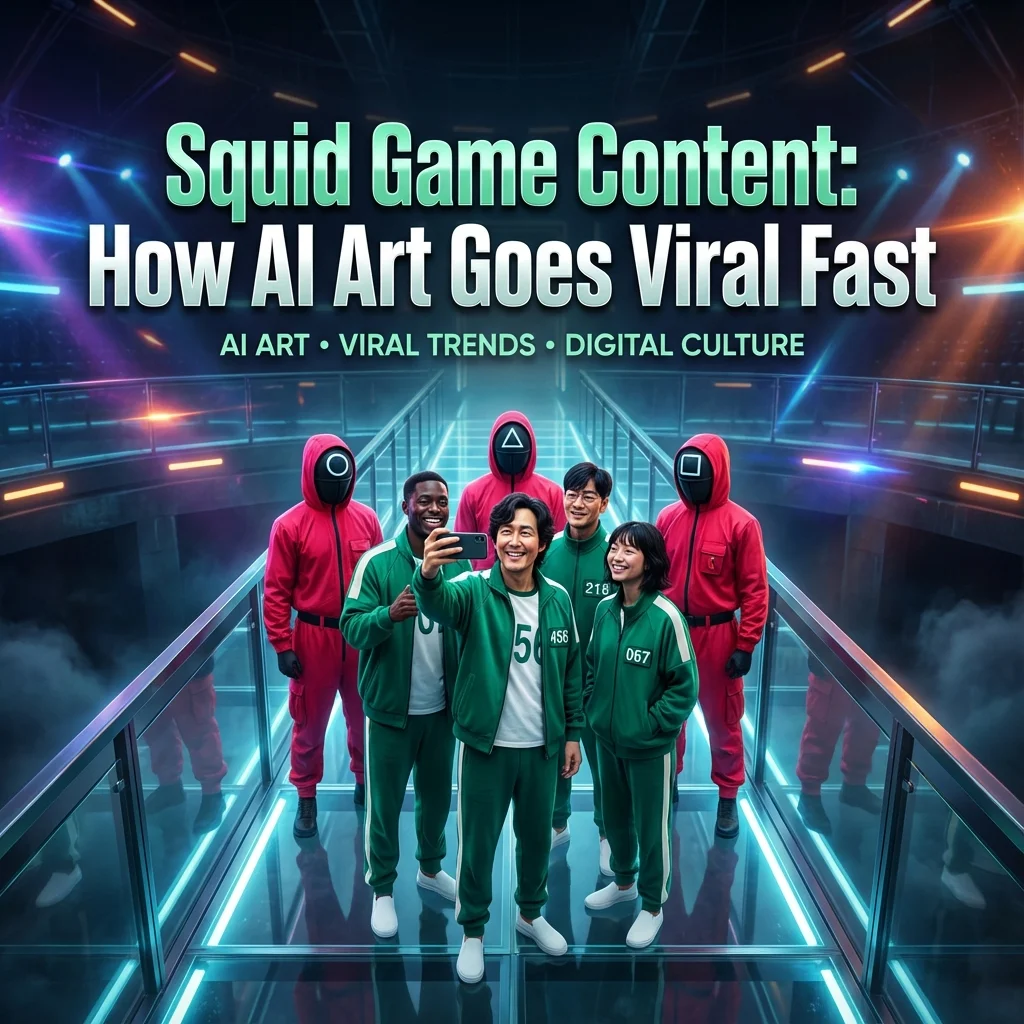
Squid Game isn’t just a show; it’s a cultural moment. The visuals—red-jacketed guards, green tracksuits, and the iconic mask shapes—are instantly recognizable. When creators tap into that shorthand, viewers instantly “get” the concept without a long setup. This immediacy translates into quick engagement: shares, saves, and comments skyrockets because the audience already has a mental image in place.
For creators, that resonance is a reliability feature. You don’t have to explain the entire premise; a single frame or prop cues the audience. And that means faster production, faster testing, and faster feedback on what works best for your audience. If you’re targeting “Squid Game content review” or “Squid Game hype review,” you’re leaning into a ready-made interest pool that shows up across platforms like TikTok, Instagram, and YouTube Shorts.
2.2 Visual hooks and suspense
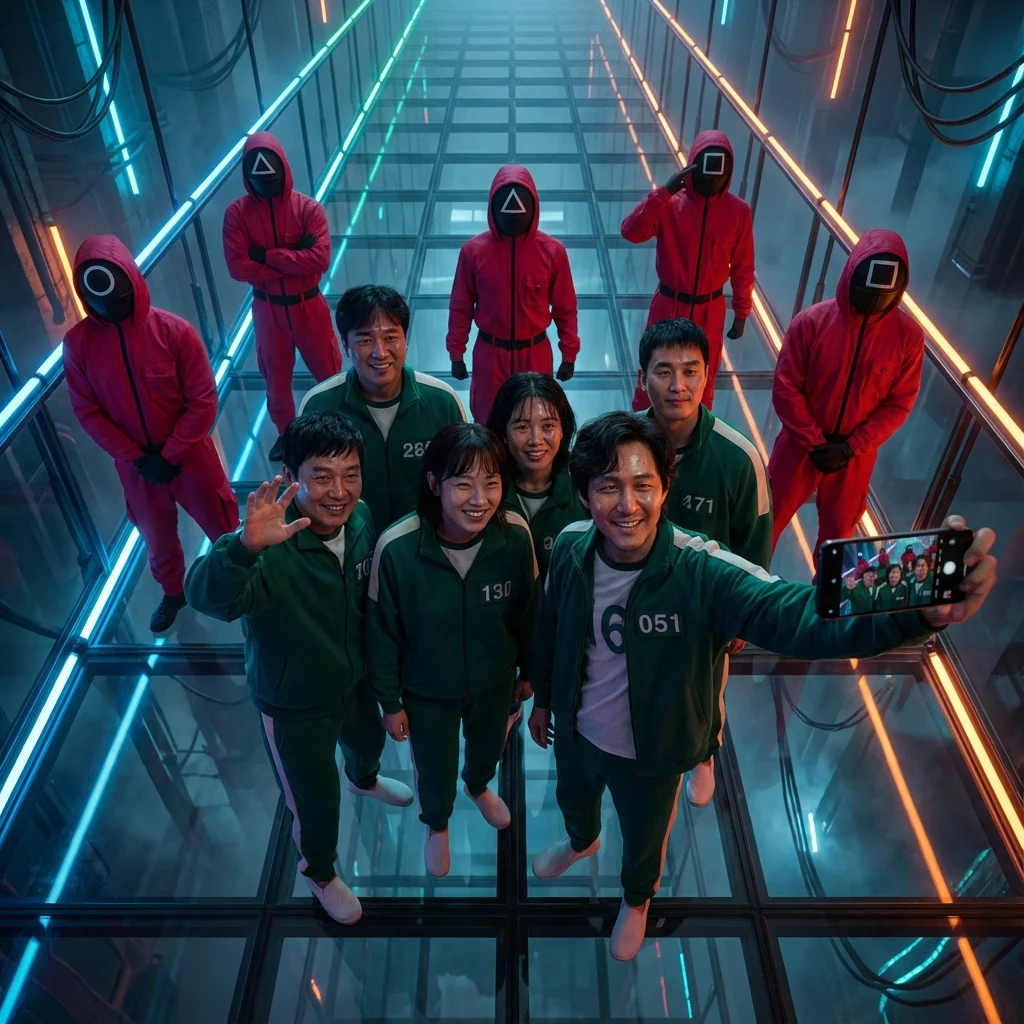
The show leans on suspenseful framing and high-contrast color storytelling: the glow of the glass bridge, the emerald green of the tracksuits, the red of the guards. In AI art, you translate that suspense into composition. A strong foreground subject with a diminishing background, or a tilt in perspective that creates a sense of movement, instantly hooks the eye. Think “hero shot on a glass bridge” or “crowd shot with masks forming a pattern.” These compositions are not just pretty; they tell a story at a glance.
When you plan for hooks, you’re planning for scroll-stopping moments—moments that shout “watch this now.” Short-form formats love that.
2.3 AI art edge and novelty
AI art is the sparkly edge in a crowded feed. The novelty isn’t just the image; it’s the method: hyperreal looks produced by prompt-driven workflows, prompt swaps, and AI-assisted edits. Content that demonstrates a process—“how I created this ultra-realistic 8K selfie with AI in a darkened arena”—becomes as valuable as the final image. Sharing prompts, settings, and tiny tips demystifies the AI journey and builds audience trust.
This is also where you can differentiate: real-world locations, “Squid Game in real life” vibes, or “Squid Game NYC/Sydney” variants give viewers something aspirational and tangible they can relate to or even imagine visiting.
2.4 Quick-turn formats for platforms
Time-to-publish matters. Platforms reward creators who can produce fast, consistent outputs. Short tutorials like “prompt-to-portrait in 60 seconds,” behind-the-scenes speed builds, or quick A/B tests of different lighting are perfect for short-form formats. Series that release weekly or bi-weekly keep audiences coming back, and episodic concepts—like a “player 001’s journey” or a “mask design challenge”—create a rhythm that helps with algorithmic discovery.
2.5 Engagement triggers to prompt comments
Ask opinions, not just displays. Questions like “Which mask design would you choose for a real-life event?” or “Which color palette nails the vibe better: neon red guards or emerald-green teammates?” prompt comments. Polls, caption polls, and “duet this with your own prompt” calls to action invite interaction. When viewers engage, platforms amplify your content to more feeds, which is what turns a viral post into a sustainable series.
Visual style foundations for AI Squid Game art
3.1 Color palettes and lighting
Color is your storytelling tool here. The red of the guards and the green of the players are not just uniforms; they cue roles, mood, and tension. For AI prompts, specify lighting that supports realism: dramatic side lighting, subtle rim light, and a dark blue or teal backdrop that makes the red pop. A touch of cinema-grade contrast—the midtone around 40–60, highlights just enough to show texture in fabric—can push an image from good to “wall-worthy.”
3.2 Composition and framing
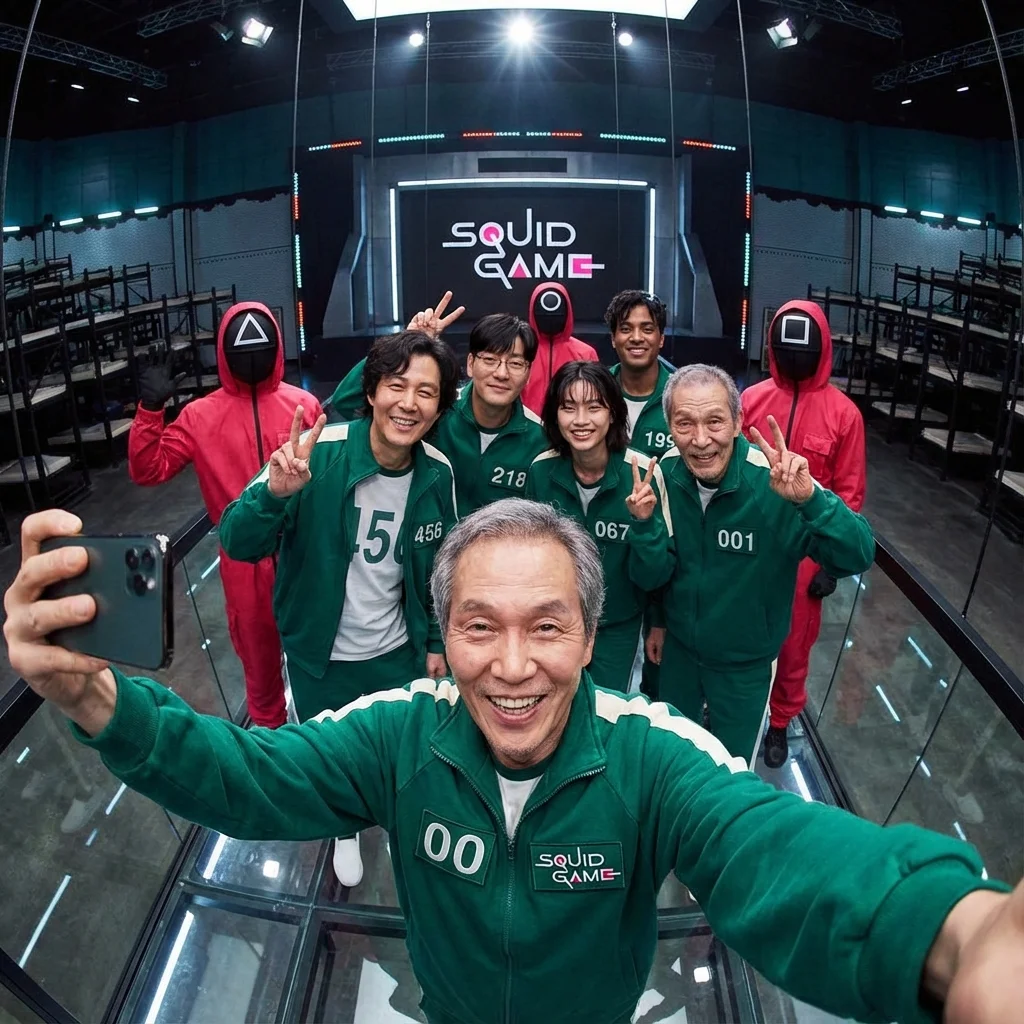
A strong composition often follows a simple rule: lead the viewer’s eye to the center subject, then let the supporting characters frame the scene. In a self-portrait style shot, a wide-angle or fisheye lens creates dynamic distortion—great for “selfie with an entourage” visuals. For group scenes, place the protagonist near the bottom third and let lines and diagonals from uniforms guide the eye toward the mask shapes and the backdrop.
3.3 Arena motifs and iconography
Winged masks, diagonal triangles, and circle motifs aren’t just design flourishes; they’re the language of the Squid Game universe. Incorporate these motifs subtly: shape outlines on masks, repeating badge numbers, or a glass-panel background etched with the familiar grid lines of the arena. Using these iconographic cues keeps visuals instantly legible to fans and newcomers alike.
3.4 Likeness vs. abstraction in prompts
Be mindful of likeness. The safest route is to evoke “inspired by” or “in the style of” rather than replicating real actors. Use generic descriptors like “a diverse group of players in green tracksuits,” or “masked guards with geometric shapes on their faces.” This keeps you safely within copyright boundaries while still delivering the vibe fans crave.
Prompt engineering for Squid Game visuals
4.1 Text prompts for realism
Craft prompts that specify realism without overloading the model with unnecessary details. For example:
-
“Ultra-realistic 8K portrait of a self-portrait in a green tracksuit, holding a selfie stick, with five teammates in the background, all wearing matching numbers, dramatic low-key lighting, glass-bridge arena in the background, 9:16 vertical.”
-
“Group selfie in a glass-bridge setting, red-clad guards behind; body language shows excitement; skin tones natural; fabric textures crisp; no pixelation; hyperreal finish.”
4.2 Image prompts and references
Image prompts work well when you provide a baseline. If you have a photo of yourself in a similar outfit, reference it directly in the prompt: “Use the uploaded photo as the face source, replace with a clean, high-detail version, keep lighting consistent with the scene.” Attach reference images when the tool supports image input to guide proportions and lighting.
4.3 Style prompts and realism controls
To keep a consistent look, lock in a few controls:
- Camera model: “Sony α7R IV level fidelity”
- Lens: “9:16 vertical, wide-angle 16mm”
- Lighting: “cinematic, high contrast, soft fill”
- Texture: “skin pores visible, fabric weave crisp”
- Color: “vibrant but natural, with strong color separation between red and green”
4.4 Prompt tuning for consistency
Run small batches with slight variations in pose, background blur, and lighting. Keep a “style baton” by sticking to the same palette, the same number scheme on uniforms, and the same arena backdrop. Save the most successful prompts as templates for future iterations to maintain a recognizable look across your Squid Game series.
Tools & templates for AI art
5.1 AI platforms (Midjourney, Stable Diffusion, DALL-E)
- Midjourney shines with style control and strong realism when you craft careful prompts.
- Stable Diffusion is excellent for local generation and iterative edits, particularly with image-to-image prompts.
- DALL-E offers strong text understanding and accessible in-browser tooling for quick tests.
5.2 Prompt templates and checklists
- Core prompt template: [subject] in [scene description], [camera angle and lens], [lighting], [color palette], [artistic style], [resolution and aspect ratio].
- Realism checklist: representative skin tones, fabric textures, lighting consistency, background depth, no artifacts in key focal areas.
- Safety checklist: avoid direct likeness of real actors; use generic terms and silhouettes where needed.
5.3 Batch generation pipelines and assets library
Create a small library: color swatches (red, green, blue), mask shapes (circle, triangle, square), and arena textures (glass, metal rails). Build a batch script that varies pose, lighting, and background while keeping uniform numbers and palette consistent. A well-organized assets library speeds up iteration and helps you scale content quickly.
Content strategy for virality & distribution
6.1 Platform-specific formats (TikTok, Instagram, YouTube Shorts)
- TikTok: vertical 9:16, punchy hooks in the first 2 seconds, quick prompt reveals, and on-screen prompts to “save for later.”
- Instagram Reels: optimized cover thumbnails, concise hooks, and text overlays that summarize the visual concept.
- YouTube Shorts: combine a short tutorial with a b-roll sequence showing the prompt-to-image pipeline, plus a strong end card.
6.2 Hooks, captions, and CTAs
- Hooks: “Watch me turn a prompt into a hyperreal Squid Game selfie in 60 seconds” or “This is how I reimagine Season 2 for creators.”
- Captions: keep it short, add a question, and invite viewers to share their prompts or ideas.
- CTAs: “Save this prompt for your next AI art session,” “Comment which character you’d want in your crew,” or “Follow for the next prompt drop.”
6.3 Hashtags, trends, and keyword signals
Use a mix of broad and niche tags: #SquidGame, #AIPrompt, #AIart, #PromptEngineering, #HyperrealAI, #SquidGameEdit, #ContentCreatorTools, #AIArtTips.
6.4 Scheduling and series planning
Plan a 6-8 episode arc: “Character Takeover” (each episode focuses on a new style), “Region Secrets” (local color and location variants like Squid Game NYC or Sydney), and “Behind the Prompt” (breakdown of prompts and decisions). Consistency beats one-off hits.
Growth systems: series, collabs, and monetization
7.1 Episodic series concepts
- “Squid Game 001: The Prompt Journal” — each episode drops a new prompt trick and a behind-the-scenes view.
- “City Squid Games” — localize the vibe to different cities, like NYC and Sydney, then compare results.
7.2 Collaboration prompts and cross-promo
Collaborate with other AI-art creators, prompt engineers, or even photographers who can provide fresh references. Cross-promote prompts and swap assets to broaden reach. A collaboration can bring in audiences who follow the partner creator for different reasons.
7.3 Reusable assets and templates
Build a “Squid Game prompt kit” you can reuse: baseline prompts, color palettes, and a few hero-shot setups. Turn these into downloadable templates or caption prompts for creators who want to remix your work.
7.4 Monetization options (sponsorships, tutorials, productized prompts)
- Sponsorships with AI tool providers.
- Tutorials and micro-courses teaching response-to-prompt workflows.
- Sell bundles of prompt templates, color packs, and asset kits.
Ethics, safety, and copyright
8.1 Copyright and trademark considerations
Avoid direct depictions of real actors or trademarked assets. Use inspired-by language and create original takes that capture the vibe without copying exact likenesses.
8.2 Avoid direct depictions of real actors/characters
To stay safe, frame characters as “generic players” or “masked participants” colored by your creative style rather than replicating real people.
8.3 Platform policy compliance
Know each platform’s rules about AI-generated imagery. Some platforms require disclosure that the image is AI-generated; include a prompt or “AI-generated” tag when appropriate.
8.4 Community guidelines and safety best practices
Promote positive, non-deceptive content. If you share prompts, include a note that some prompts may produce hyperreal outputs and should be used responsibly.
SEO, discoverability, and monetization for Squid Game art
9.1 Keyword research and topic clusters
Target clusters like “Squid Game immersive experience,” “Squid Game location guide,” and “Squid Game tickets” alongside broader AI art topics. Use long-tail phrases to capture niche search intent.
9.2 Metadata, thumbnails, and titles
- Titles should be clear and compelling: “Finally made it to Squid Game AI Art Series: From Prompt to Ultra-Realistic Selfie.”
- Thumbnails should show bold color contrast, a recognizable hero subject, and a legible overlay label (for example, “AI Squid Game Prompt Breakdown”).
- Descriptions should include keywords, a short summary, and a call-to-action.
9.3 On-page SEO for blogs and video descriptions
Use subheadings (H2/H3), short paragraphs, bullet lists for prompts and tips, and alt text for images. Keep the page load quick by optimizing images and using lazy loading where possible.
9.4 Monetization and analytics
Track views, saves, shares, and watch time. Use A/B tests for thumbnails and titles. Monetize through sponsorships, tutorials, and prompt packs, and consider tiered offerings such as free prompts with paid bundles.
9.5 A/B testing and iteration
Constantly test: different color palettes, different end-card styles, and different hook phrases. Use data to drive your next set of prompts and visuals.
Key takeaways
- Squid Game content resonates because it taps into a shared visual lexicon and a moment in popular culture.
- The fastest route to virality is a strong hook, vivid but safe visuals, and a repeatable prompt-to-image workflow you can scale.
- Use a mix of realism cues and generic characters to balance fidelity with copyright safety.
- Build a content system: episodes, templates, and partnerships that accelerate growth and provide ongoing value to your audience.