Beat content idea fatigue with a repeatable system that turns past posts into fresh angles via a content vault and AI ideation for consistency.
Introduction
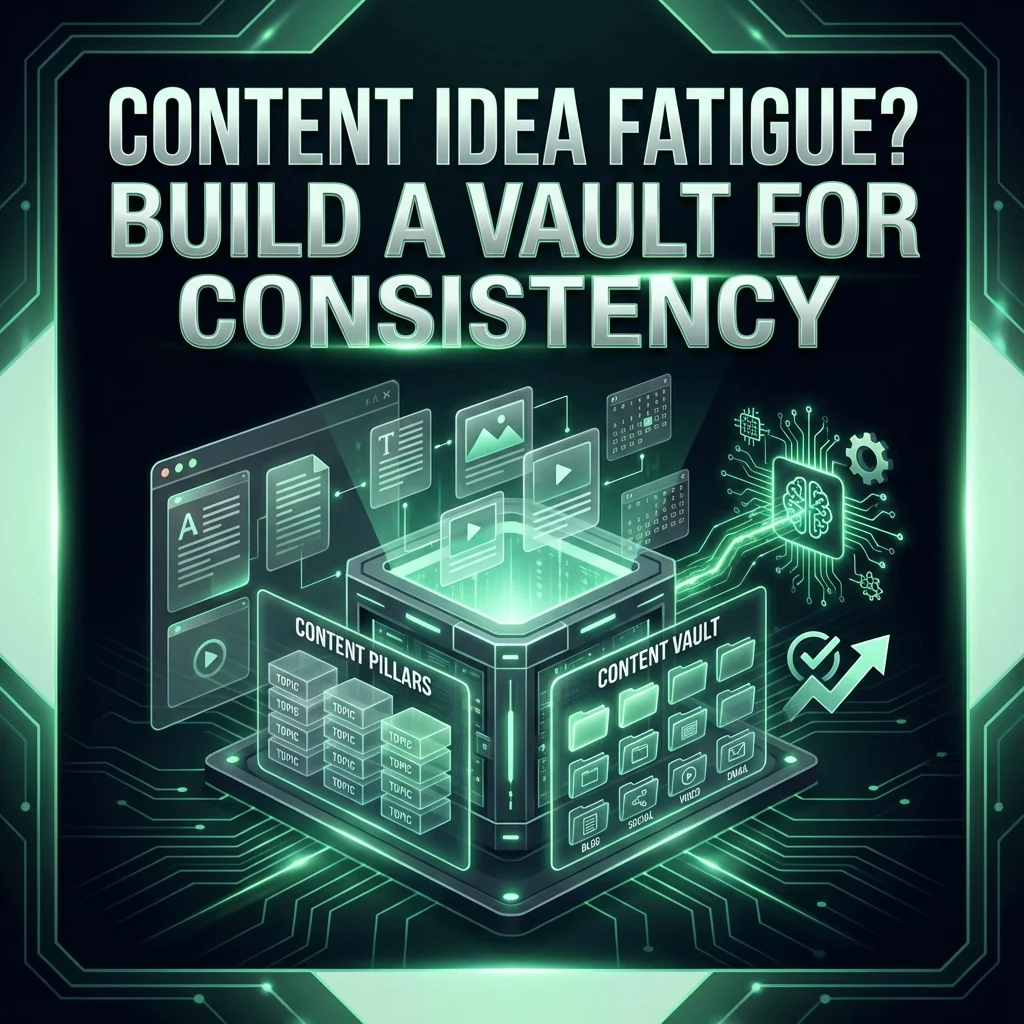
Tired of staring at a blank screen, hoping for content ideas to pop? You’re not alone. Many creators hit content idea fatigue, a noise that makes every brainstorm feel like a slog. This guide shows you a repeatable system to generate ideas, hooks, captions, and smart repurposing—without burning out.
What is content idea fatigue?
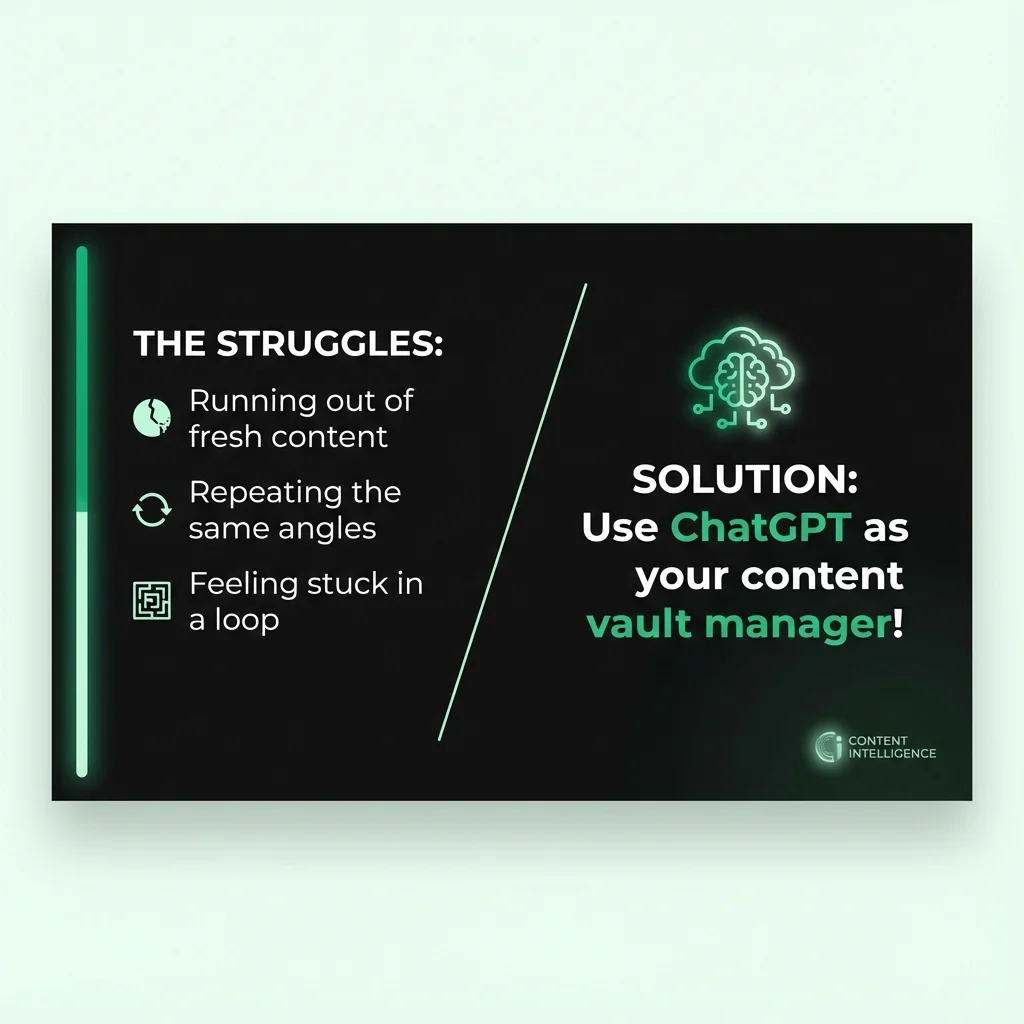
Content idea fatigue is when your creative brain runs on empty. It looks like this: you scroll your own archives, you draw a blank, and you end up posting the same angles, the same tones, or worse—taking long pauses between posts. It feels like you’re stuck in a loop, running low on fresh content, and searching for that spark you once had.
Think of your content like a library. If you only pull from the newest shelf, you miss the quiet corners of your past work, the “hidden gems” that can be reshaped into fresh posts. Fatigue isn’t a lack of effort; it’s a mismatch between your brain’s needs and your workflow. The fix is not waiting for inspiration to strike but building a reliable system that turns ideas into repeatable outputs.
Here’s why fatigue happens to most solo creators and small brands:
- You’re wearing many hats. Planning, writing, editing, posting, engaging—it all stacks up.
- Your brain craves variety, but your schedule pushes you toward quick wins.
- You don’t have a central place to mine ideas from your own data (past posts, comments, questions, and wins).
- AI can help, but without a system, you end up chasing shiny prompts instead of building momentum.
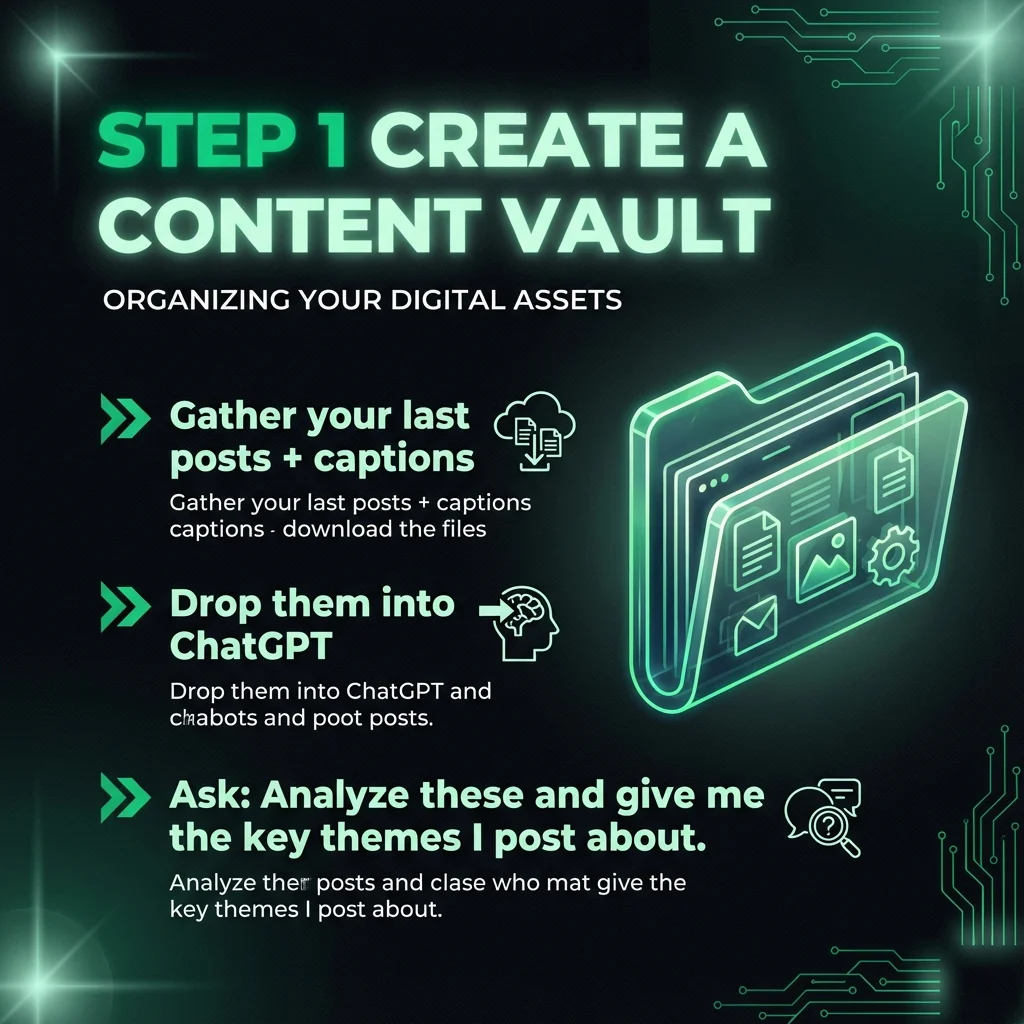
The good news? You can beat fatigue by creating a “content vault”—a centralized system that stores your best ideas and repurposes them in smart ways. It’s like having a pantry stocked with ingredients you know your audience loves, ready to cook into fresh meals.
As you read, imagine your future workflow not as a last-ditch effort to post but as a smooth conveyor belt: ideas enter, you filter, you adapt, and you publish—with less stress and more consistency.
Build a repeatable idea system
A repeatable idea system is a simple, step-by-step method that turns a spark into a tangible post. It’s like a factory for ideas where each stage adds value, checks quality, and moves you closer to publishing. The goal is not to be endlessly clever in the moment; it’s to be reliably productive—so you can post more with less energy spent on the “what’s next?” question.
With a repeatable system, you’ll:
- Break content fatigue by giving your brain a predictable rhythm.
- Turn past posts into fresh angles without reinventing the wheel every time.
- Use AI to accelerate ideation while keeping human judgment at the center.
- Create ready-to-use posts that fit multiple platforms without starting from scratch each time.
A good system starts with clear pillars, moves through generated ideas, and ends with efficient scheduling and repurposing. It’s a loop you can repeat weekly or monthly, not a one-off sprint.
1) What is a repeatable idea system for content?
A repeatable idea system is a documented method to consistently produce content ideas, validate them quickly, and turn them into publish-ready posts. It includes pillars (themes), prompts for generating ideas, a quick validation process, and a plan for repurposing. The key is repeatability: you can run the same steps again and again, with only small tweaks.
A system helps you fight burnout by removing the mental burden of always starting from zero. It also scales with you: as your audience grows, you can add more pillars, templates, and prompts without overhauling your process.
2) Benefits of a structured system
- Predictable output: When you follow steps, volume doesn’t come at the cost of quality.
- Faster ideation: Pre-built prompts and templates cut the time from idea to post.
- Better use of your past content: Your archive becomes a gold mine, not a dusty shelf.
- Easier onboarding: If you hire or outsource, a clear system keeps everyone aligned.
- Greater platform flexibility: A single idea can be tailored for multiple channels with minor edits.
Now imagine a toolset that not only helps you brainstorm but also organizes, validates, and schedules your content. That’s what a structured system delivers: clarity, control, and consistency.
3) How to set up a 4-step idea factory
Think of this as your content assembly line: Step 1 gather, Step 2 ideate, Step 3 validate, Step 4 schedule and repurpose. Each step adds a layer, and you circle back to refresh ideas as you publish.
- Step 1: Pillars and themes
- Step 2: AI prompts for ideation
- Step 3: Validation and prioritization
- Step 4: Scheduling and repurposing
3.1 What is a repeatable idea system? (Expanded)
A repeatable idea system is more than a checklist. It’s a living framework that evolves as your audience grows. Start with a few pillars—say marketing tips, behind-the-scenes, and case studies—and let AI help you brainstorm around those topics. Then, you add a quick validation step: rate ideas on relevance, novelty, and potential engagement. Finally, you design micro-workflows to turn each idea into multiple formats: a caption, a short video hook, a carousel post, and a repurposed blog snippet. The repeatable part comes from templates, prompts, and a human-in-the-loop review that keeps quality high.
This approach is like building a toolbox you can reach for in seconds, not an empty shelf of vague intentions. It reduces decision fatigue and makes posting routine—not robotic.
3.2 Benefits of a structured system (Expanded)
- Consistency without rigidity: You keep your voice intact while delivering regular content.
- More efficient use of AI: Prompts become templates; prompts become workflows; workflows become calendars.
- Data-informed growth: You test ideas, track results, and refine prompts to suit audience preferences.
- Lower burnout risk: A defined cadence helps you protect your energy and set boundaries.
A structured system also creates a buffer: you can pause and still publish because your process is built on assets you’ve already created.
3.3 How to set up a 4-step idea factory (Expanded)
Let’s briefly zoom into each step, with practical tips for quick wins.
3.3.1 Step 1: Pillars and themes (300 words)
- Pick 4–6 pillars that match your niche and audience needs.
- For each pillar, draft 3–5 subtopics you can cover in different formats.
- Gather related questions from comments, DMs, and FAQs you hear often.
- Create a simple content calendar that maps pillars to posting cadence.
3.3.2 Step 2: AI prompts for ideation (300 words)
- Build a prompt bank: “Give me 10 angles for [pillar topic], each with a hook and a suggested post format.”
- Include constraints: tone, length, platform, and whether to add a CTA.
- Save prompts as templates to reuse weekly with fresh data from your vault.
3.3.3 Step 3: Validation and prioritization (200 words)
- Quick checks: is the idea unique in your niche? does it address a known pain point? can you prove it with data from past posts?
- Rate ideas 1–5 on relevance, potential engagement, and ease of production.
- Prioritize top 3–5 ideas per week for production blocks.
3.3.4 Step 4: Scheduling and repurposing (200 words)
- Create a publishing cadence that fits your life (e.g., 3 posts/week plus 2 short-form clips).
- For each idea, map out at least 2 repurposed formats (e.g., blog excerpt turned into captions, or a carousel turned into short clips).
- Use a content calendar and tagging system to track pillars, formats, and platforms.
AI prompts for ideas, hooks, and captions
A well-structured prompt set turns vague inspiration into crisp content blocks. Use a mix of broad topic prompts and tight micro-prompts to keep ideas fresh and adaptable.
4.1 Prompts for idea generation by pillar
-
For Pillar: Content strategy tips
- Prompt: Generate 8 fresh content ideas about simple, repeatable content strategies for small brands. Each idea should include a short hook, 2–3 angles, and 1 platform best format.
-
For Pillar: Content vault and repurposing
- Prompt: Create 6 ideas showing how to turn past posts into new formats, with notes on which angles performed best and why.
-
For Pillar: Personal stories behind the brand
- Prompt: List 7 story angles that illustrate a behind-the-scenes moment, each with a lesson learned and a micro-caption.
-
For Pillar: Quick win tactics
- Prompt: Give 5 fast, actionable tips that creators can implement in 10 minutes.
4.2 Hooks and caption prompts
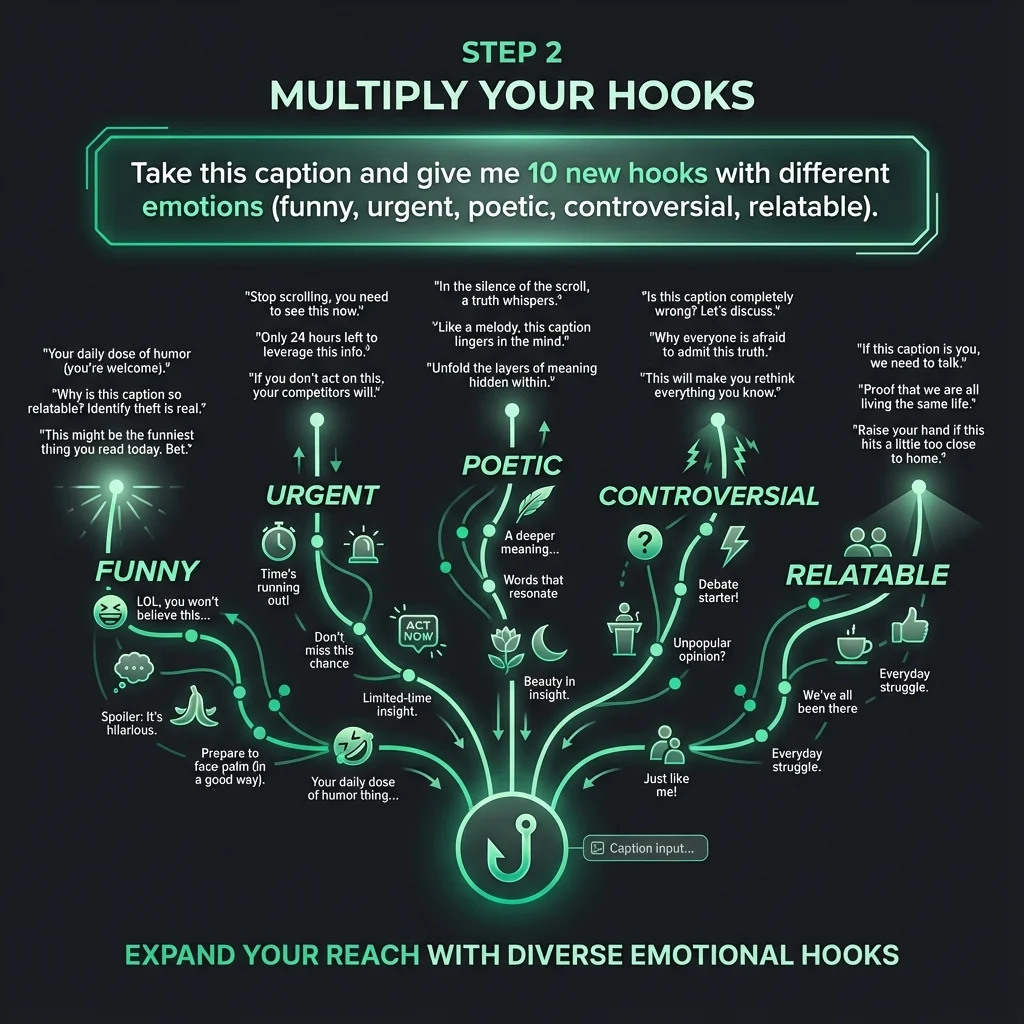
- Prompt: Take this caption and give me 10 new hooks with different emotions (funny, urgent, poetic, controversial, relatable).
4.3 Platform-specific prompt templates
- Instagram: Prompt: Create a 9-slice carousel idea with 2 sentence captions per slide and a hook for the first slide.
- TikTok: Prompt: Outline a 30-second video script with 3 quick tips and a CTA.
- LinkedIn: Prompt: Write a post with a professional tone that highlights a case, plus 1 chart idea.
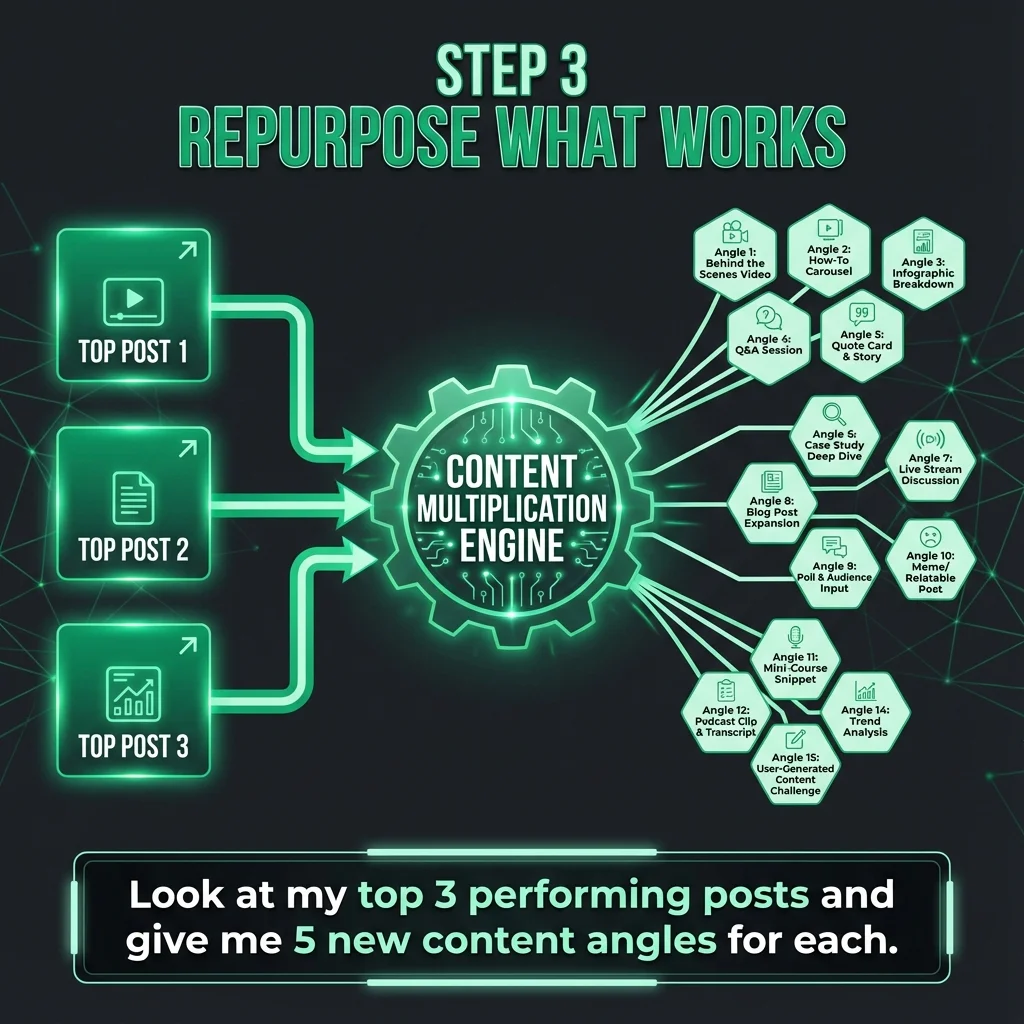
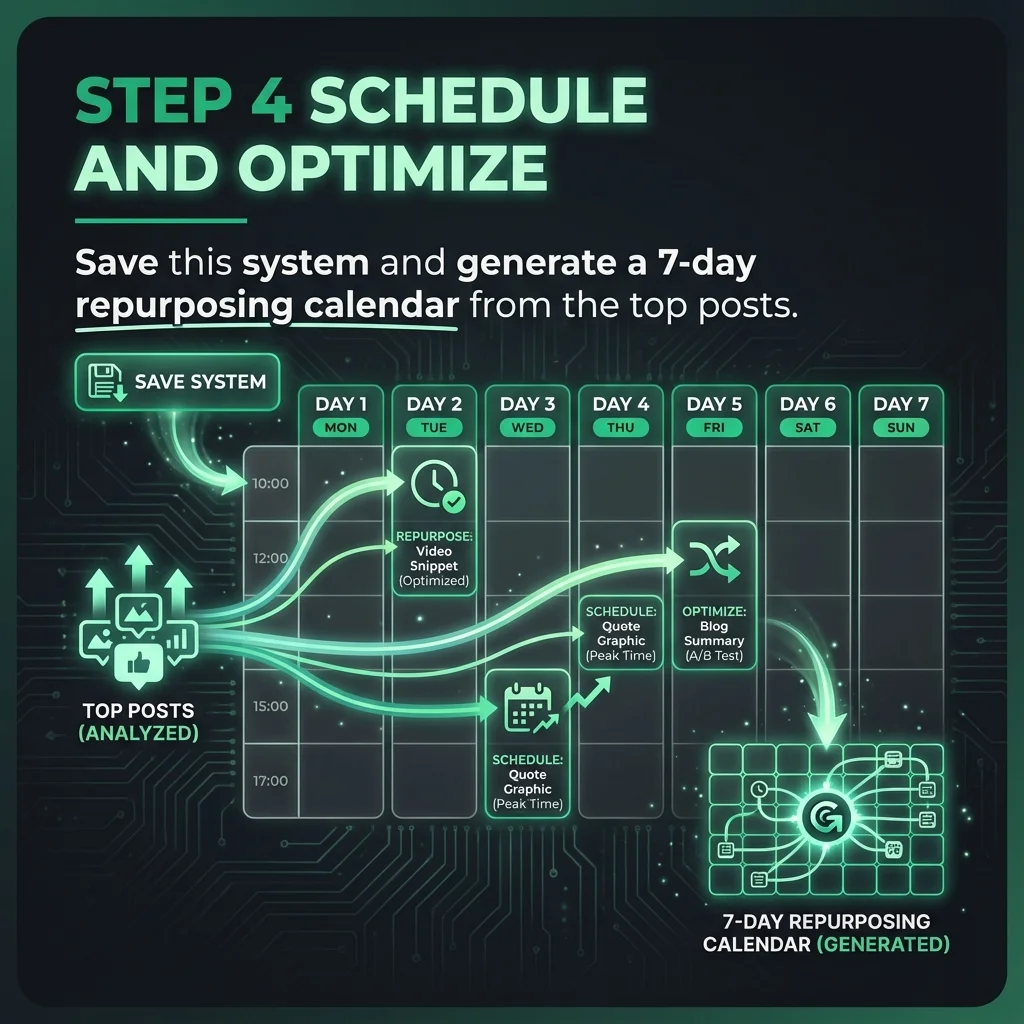
4.4 Repurposing prompts
-
Prompt: Look at my top 3 performing posts and give me 5 new content angles for each.
-
Prompt: Save this system and give me a weekly repurposing plan from the top 3 posts.
Tools, templates, and workflows for scaling with AI
Growing with AI isn’t magic; it’s a process. The right mix of tools, templates, and workflows keeps you moving forward without burning out.
5.1 AI tools overview
- AI for ideation: ChatGPT with a well-organized vault and pillar prompts.
- AI for draft: caption and short-form scripts generation.
- AI for optimization: A/B testing ideas and performance analysis via simple dashboards.
- Project management: lightweight task boards to track ideas, status, and deadlines.
Choose tools that fit your comfort level and budget, and start with a small, repeatable setup.
5.2 Templates and prompts library
- Idea templates: Pillar → 3 angles → Hook → Caption draft.
- Caption templates: Hook, value prop, CTA, and hashtags tailored to platform.
- Repurposing templates: Original post → 2 clips + 1 caption variation.
Store these as a living library you can update weekly.
5.3 Workflow automation
- Create a weekly cadence: gather inputs, ideate, validate, draft, schedule.
- Set automations to push top ideas into your calendar and set reminders for shooting and editing.
- Use templates to auto-fill captions and hashtags, reducing decision fatigue.
Automation helps you scale without sacrificing voice or quality.
Editorial calendar and batching
A well-planned calendar keeps your content flowing. Batching is the art of doing similar work in one block so you move faster and stay in the flow.
6.1 Build an editorial calendar
- Map pillars to a cadence (e.g., 4 posts per week across 3 pillars).
- Reserve blocks for ideation, drafting, and editing.
- Leave room for spontaneous posts tied to trends without breaking your rhythm.
6.2 Batch create content blocks
- Batch 1: 3 idea seeds per pillar.
- Batch 2: Draft captions and hooks for those seeds.
- Batch 3: Create visuals, videos, or carousels.
- Batch 4: Schedule and queue for posting.
Batching reduces setup time and keeps energy high.
6.3 Schedule and publish
- Use a simple publishing window you can manage consistently.
- Schedule repurposed formats for cross-platform visibility.
- Leave a buffer for engagement and learning from audience reactions.
Data-driven iteration
Let data guide improvement. You don’t chase every trend; you chase what resonates with your audience.
7.1 Define KPIs
- Reach and impressions by pillar
- Engagement rate per post
- Click-throughs to your website or landing page
- Saved or shared content as a signal of value
7.2 Analyze performance
- Review top posts each week; note common themes, formats, and hooks.
- Compare performance across platforms to spot format preferences.
- Track your production time vs. outcomes to improve efficiency.
7.3 Iterate prompts
- Update prompts with successful angles and drop ones that underperform.
- Add new pillars based on audience questions and feedback.
- Refine tone and length to match evolving audience preferences.
Burnout-proofing best practices
Sustainable content creation is a marathon, not a sprint. Build rituals that protect your energy.
8.1 Cadence and boundaries
- Set a realistic posting cadence that fits your life.
- Block time for deep work and separate time for engagement.
- Say no to projects that don’t align with your pillars.
8.2 Delegation and outsourcing
- Hire help for editing, caption drafting, or graphic design.
- Use clear systems so your contractors can jump in smoothly.
- Start small with a single recurring task and scale as you gain trust.
8.3 Mindset and rest
- Treat rest as part of your work, not a break in progress.
- Use micro-breaks and short vacations to recharge.
- Remember: consistency beats intensity.
Case studies and examples
Real stories show what’s possible with a repeatable system.
9.1 Case study: Solo founder success
A solo creator started with 4 pillars, used a small AI prompt library, and posted consistently 3 times a week. Within 3 months, engagement rose by 40%, and the content vault produced fresh angles without extra creative stress.
9.2 Case study: Small brand growth
A small brand used repurposing to stretch each post into 3 formats. Revenue links in posts rose as the audience found more value through consistent messaging and varied formats.
9.3 Case study: Content team uplift
A tiny team used a shared prompts library and a simple workflow to scale from 5 to 12 posts per week. Clear roles and a simple review loop kept quality high while reducing last-minute rushes.
Common mistakes to avoid
- Not validating ideas: Quick checks save time and keep quality intact.
- Over-reliance on AI without human context: AI should augment, not replace, your voice.
- Ignoring platform differences: A format that shines on TikTok might underperform on LinkedIn.
Key takeaways
- Fatigue comes from a lack of structure, not a lack of ideas. Build a repeatable system to turn past content into new ideas.
- A content vault, pillars, and a small set of AI prompts can dramatically increase output with less effort.
- Prioritize validation and repurposing to stretch each idea across formats and platforms.
- Batch work, set boundaries, and use data to guide iteration. Burnout-proofing is part of the system, not an afterthought.
Take action
If you’re ready to build your own Content Vault, start by listing 4–6 pillars that fit your audience. Create a short AI prompt bank for ideation and save it as templates. Then batch your next week of content in one sitting and schedule it. Your future self will thank you.