Learn how to eliminate the plastic AI look using professional photography technicalities and Google Gemini prompt engineering for film-like urban portraits.
The Shift Toward “Moody Urban” Storytelling
The trend is shifting away from hyper-polished visuals toward the “Moody Urban” aesthetic. This style treats the city as a supporting character, building a cinematic connection that feels like a memory rather than a render.
To achieve this, you must intentionally introduce imperfection. Most AI art looks “computer-generated” due to oversaturation and sharp edges. Break the digital look with nostalgic film grain, subtle desaturation, and “dirty” light—lighting that feels organic and raw.
Google Gemini is a powerful tool for high-fidelity portraiture when you use the language of a cinematographer to bridge the gap between a digital file and a filmic shot.
Treat the Prompt Like a Real Camera
Stop describing the subject and start describing the metadata. Pros tell the AI how the camera is behaving.
Phrases like “Shot on 35mm, f/2.8, ISO 400” are precise instructions for light physics and lens compression. A wider aperture (f/2.8) forces a shallow depth-of-field, instantly replacing plastic textures with realistic background blur.
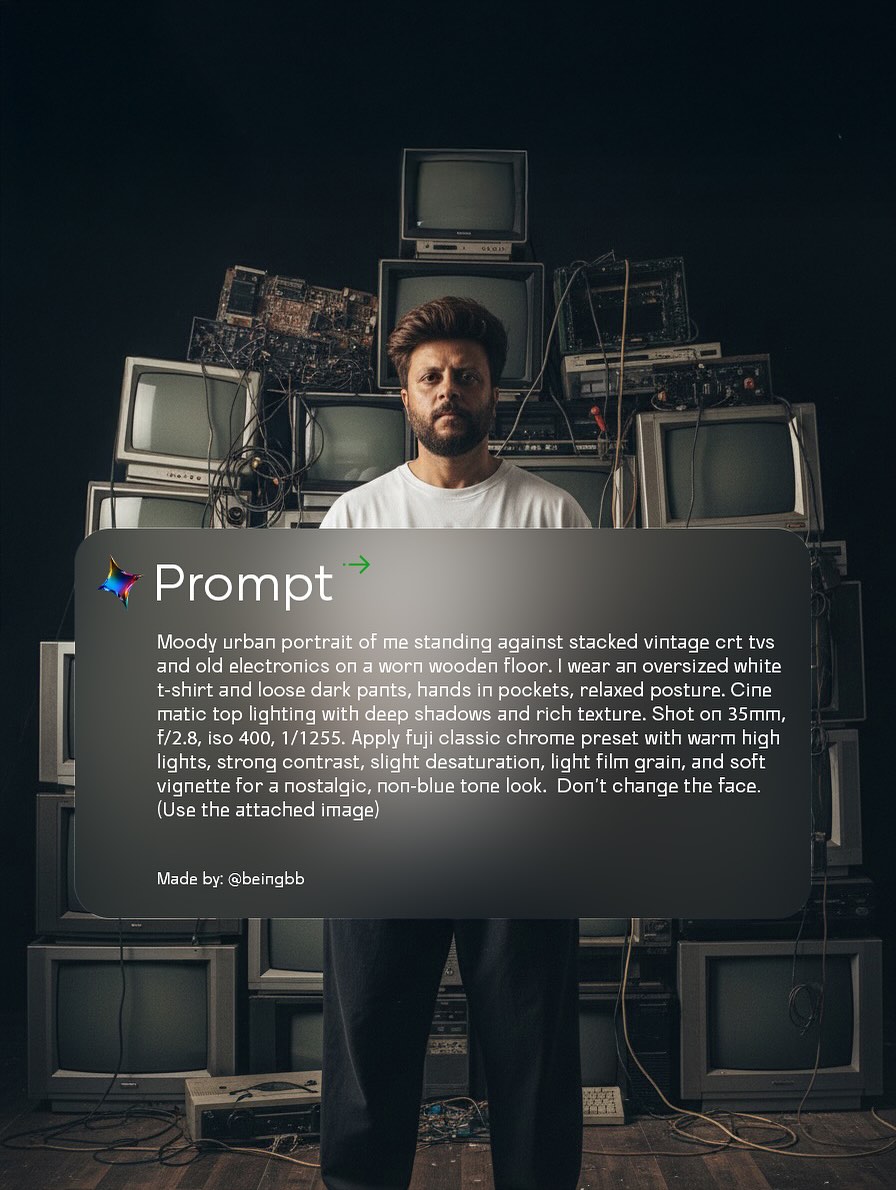
Moody urban portrait of me standing against stacked vintage crt tvs and old electronics on a worn wooden floor. I wear an oversized white t-shirt and loose dark pants, hands in pockets, relaxed posture. Cinematic top lighting with deep shadows and rich texture. Shot on 35mm, f/2.8, iso 400, 1/125s. Apply fuji classic chrome preset with warm high lights, strong contrast, slight desaturation, light film grain, and soft vignette for a nostalgic, non-blue tone look. Don’t change the face. (Use the attached image)
Lighting—It’s About What You Don’t See
Broad, even lighting flattens images. Instead, prompt for cinematic top lighting where light “fights” to enter the frame.
Focus on how light enters the room. Ask for “slivers of soft, dramatic light” or “dust-filled beams.” This creates three-dimensional depth, using shadows to hide unnecessary detail and forcing focus onto the mood.
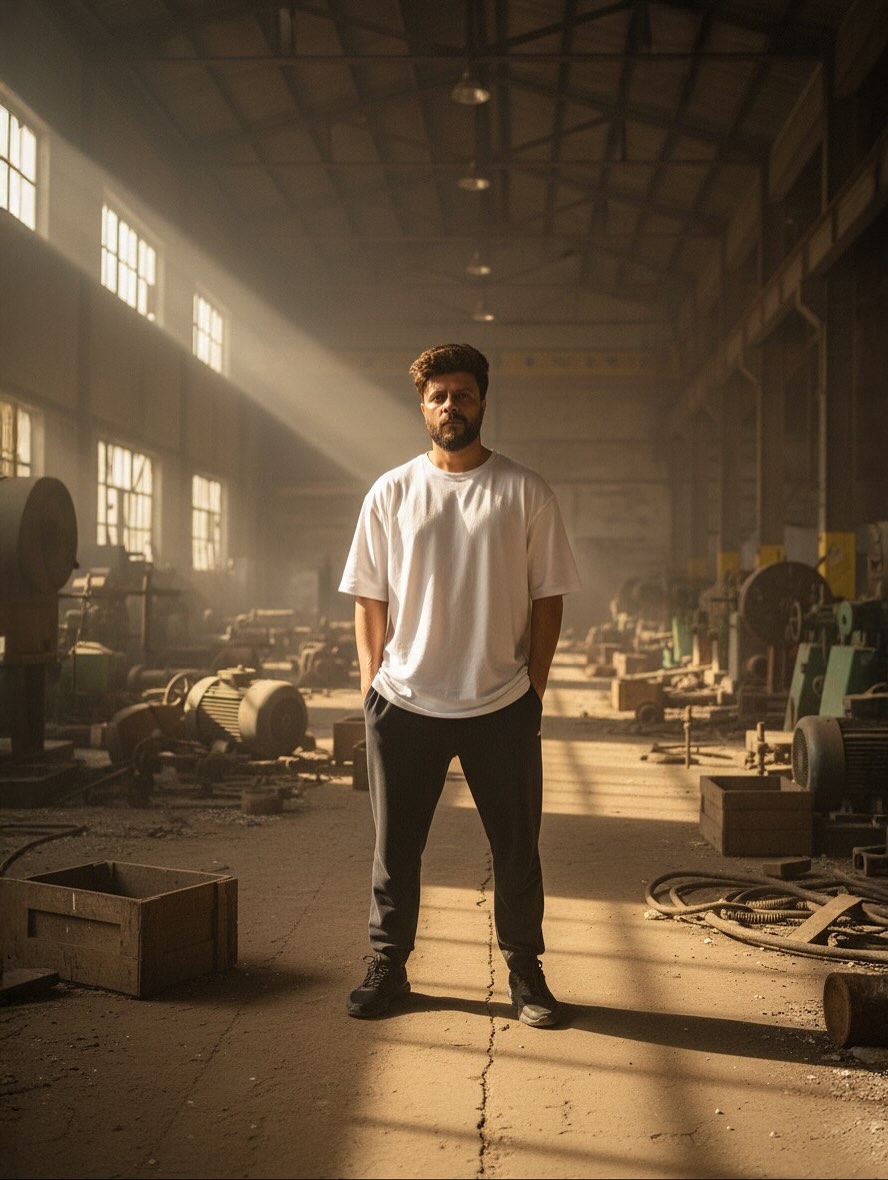
A man in a white T-shirt and black pants, in a huge, dusty, light-filled industrial hall workshop, with industrial tools in the background, a beam of light coming through the window, shot with a Canon…
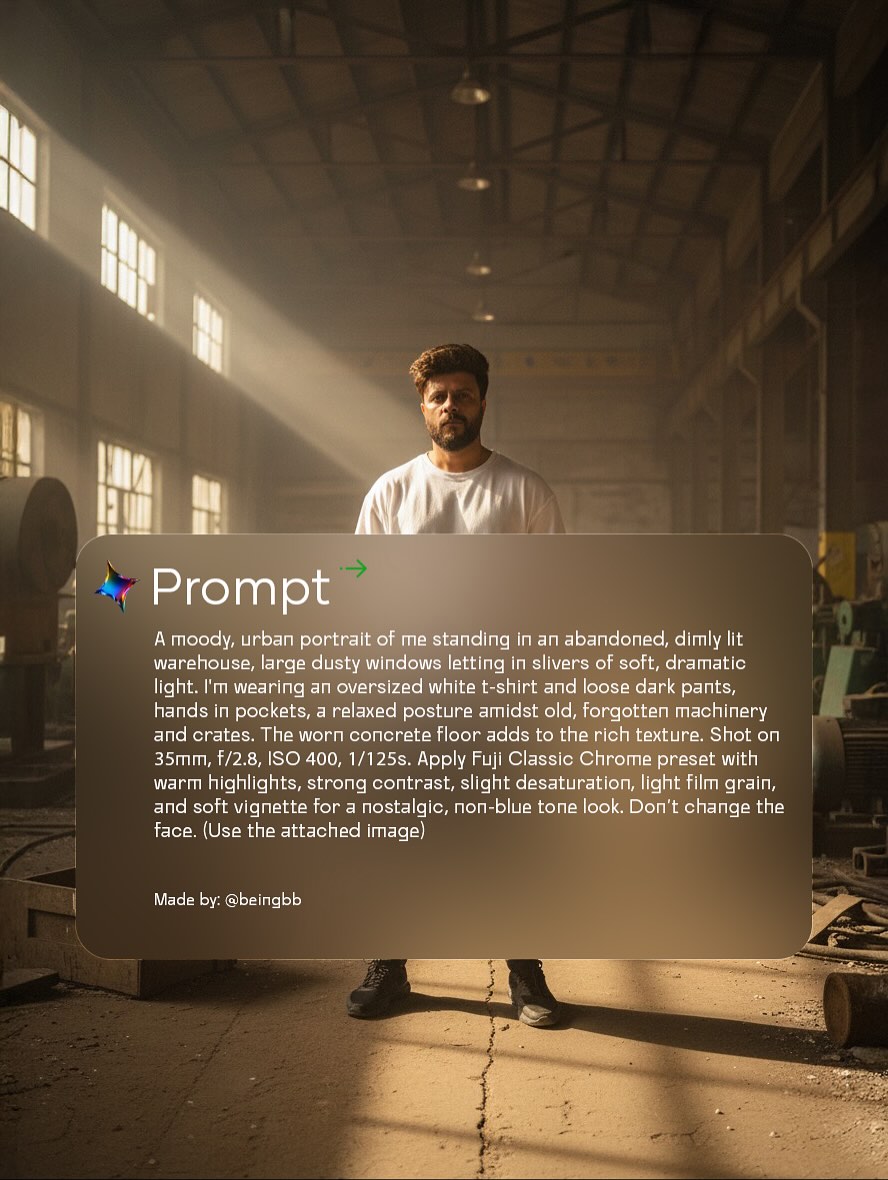
A moody, urban portrait of me standing in an abandoned, dimly lit warehouse, large dusty windows letting in slivers of soft, dramatic light. I’m wearing an oversized white t-shirt and loose dark pants, hands in pockets, a relaxed posture amidst old, forgotten machinery and crates. The worn concrete floor adds to the rich texture. Shot on 35mm, f/2.8, ISO 400, 1/125s. Apply Fuji Classic Chrome preset with warm highlights, strong contrast, slight desaturation, light film grain, and soft vignette for a nostalgic, non-blue tone look. Don’t change the face. (Use the attached image)
In street photography, harsh architectural lines frame the subject to tell a story of solitude. Look for concrete overpasses, tunnels, or bridge underbellies. These create leading lines that pull the eye to your subject.
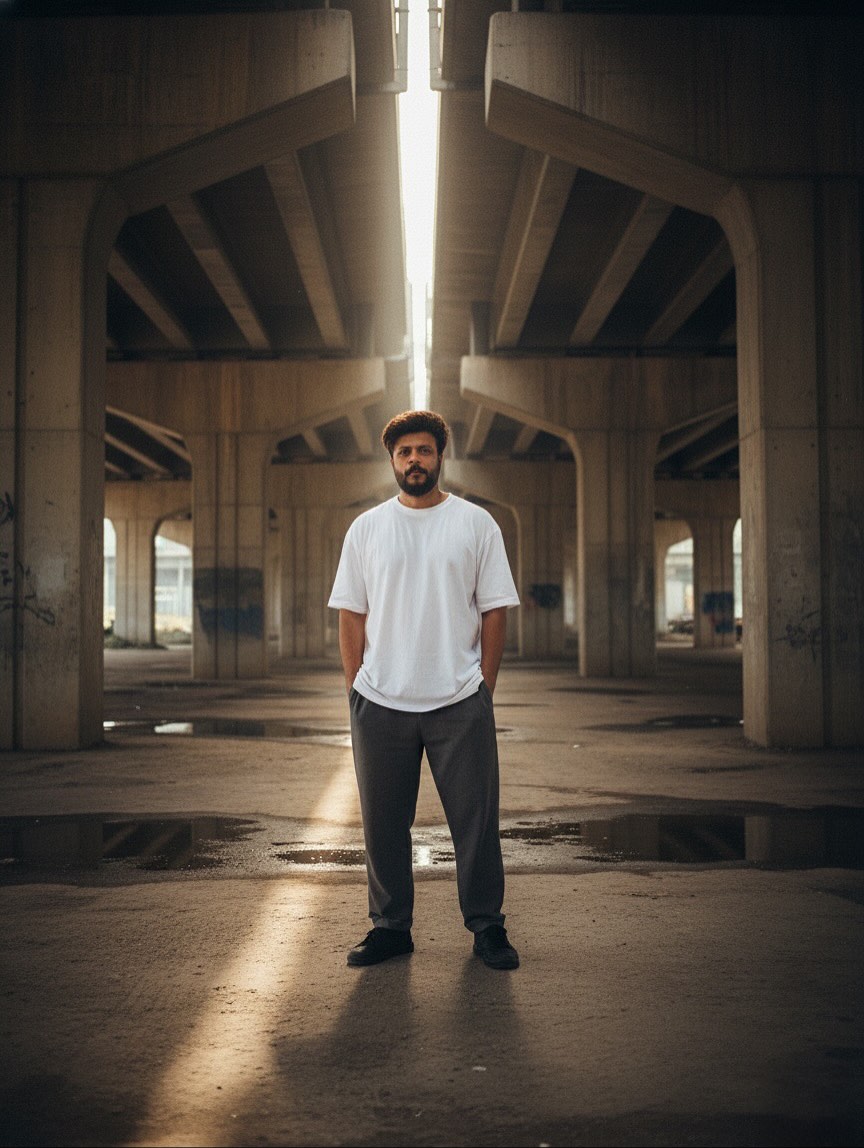
fujifilm photograph, a man standing under a bridge, in the style of award-winning, light and shadow, light white and dark bronze, symmetrical, eye-level, wide angle, raw, 4k, film grain, cinematic lig…
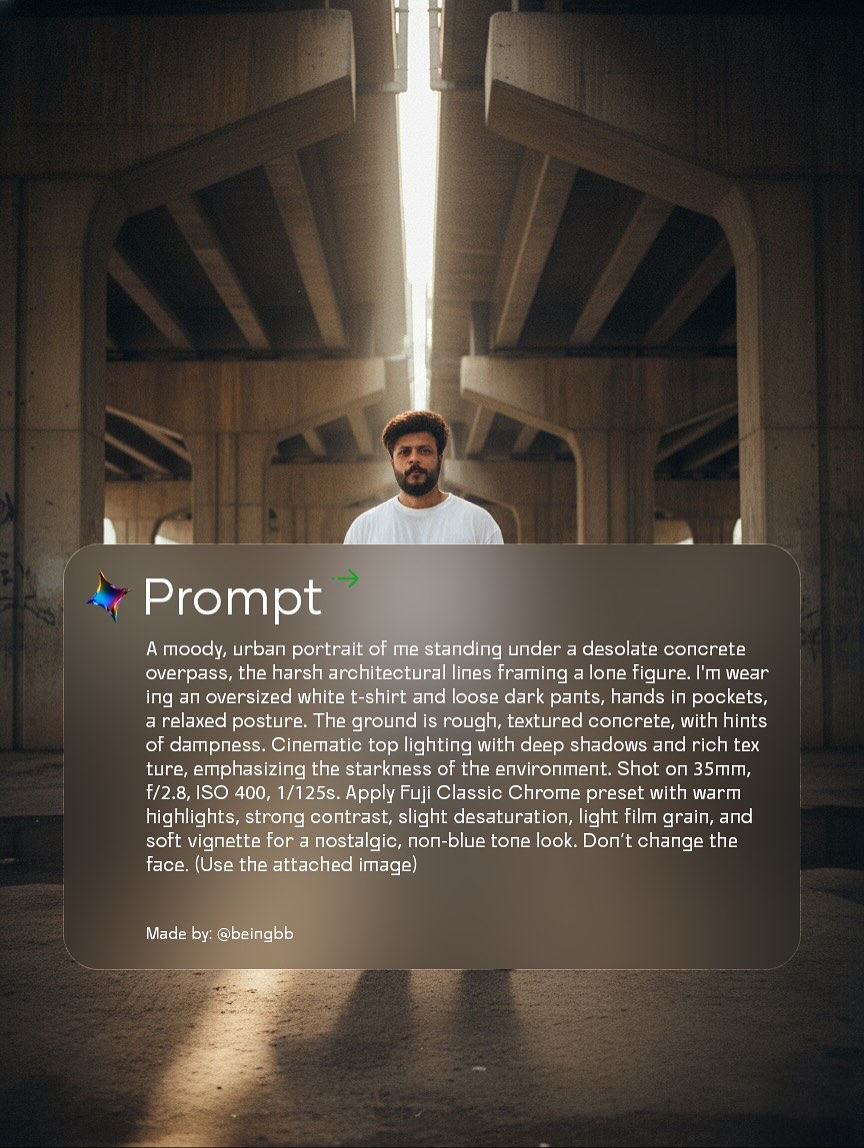
A moody, urban portrait of me standing under a desolate concrete overpass, the harsh architectural lines framing a lone figure. I’m wearing an oversized white t-shirt and loose dark pants, hands in po…
The “Fuji Classic Chrome” Secret Sauce
To get a consistent look across rain-slicked streets or industrial alleys, you need a unified color language. The Fuji Classic Chrome preset instruction provides specific color science: muted tones, boosted contrast, and warm highlights.
Specifying “non-blue tones” keeps shadows moody without looking synthetic, creating a warm-nostalgic grade that makes a portfolio feel cohesive.
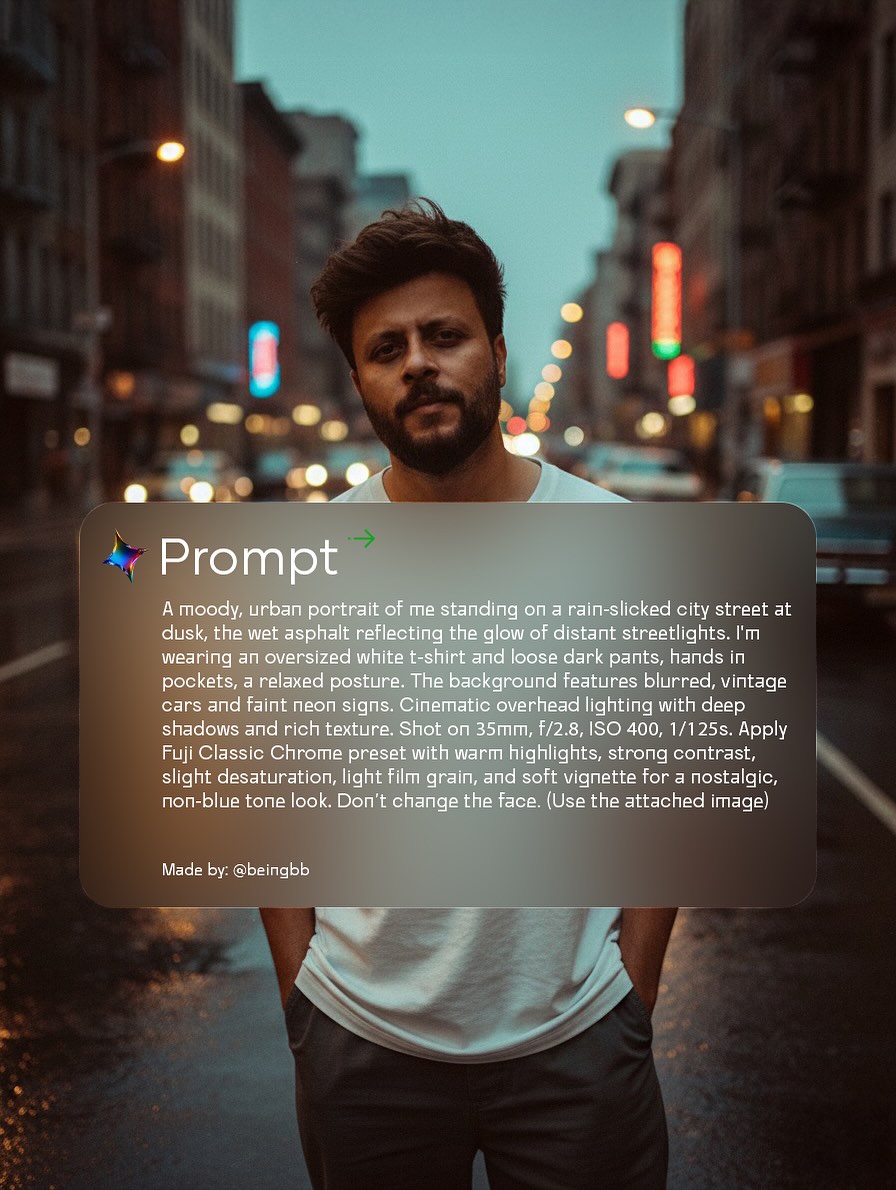
A moody, urban portrait of me standing on a rain-slicked city street at dusk, the wet asphalt reflecting the glow of distant streetlights. I’m wearing an oversized white t-shirt and loose dark pants, hands in pockets, a relaxed posture. The background features blurred, vintage cars and faint neon signs. Cinematic overhead lighting with deep shadows and rich texture. Shot on 35mm, f/2.8, ISO 400, 1/125s. Apply Fuji Classic Chrome preset with warm highlights, strong contrast, slight desaturation, light film grain, and soft vignette for a nostalgic, non-blue tone look. Don’t change the face. (Use the attached image)
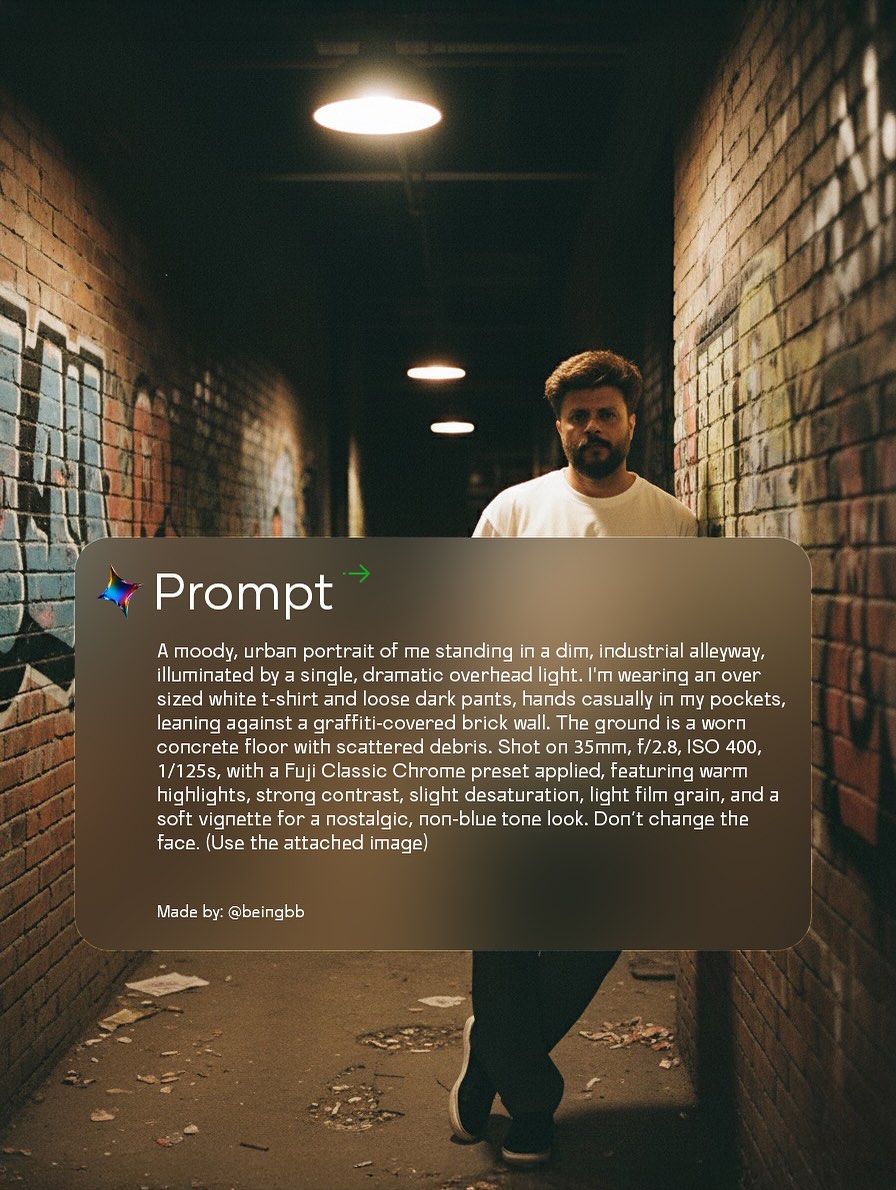
A moody, urban portrait of me standing in a dim, industrial alleyway, illuminated by a single, dramatic overhead light. I’m wearing an over sized white t-shirt and loose dark pants, hands casually in my pockets, leaning against a graffiti-covered brick wall. The ground is a worn concrete floor with scattered debris. Shot on 35mm, f/2.8, ISO 400, 1/125s, with a Fuji Classic Chrome preset applied, featuring warm highlights, strong contrast, slight desaturation, light film grain, and a soft vignette for a nostalgic, non-blue tone look. Don’t change the face. (Use the attached image)
The Takeaway
True AI artistry requires prompt engineering that respects photography traditions. By combining technical camera settings, architectural framing, and intentional film grading, you control the output rather than the machine. Consistency in your “camera” and “film grain” hooks will produce a portfolio that looks professionally shot.